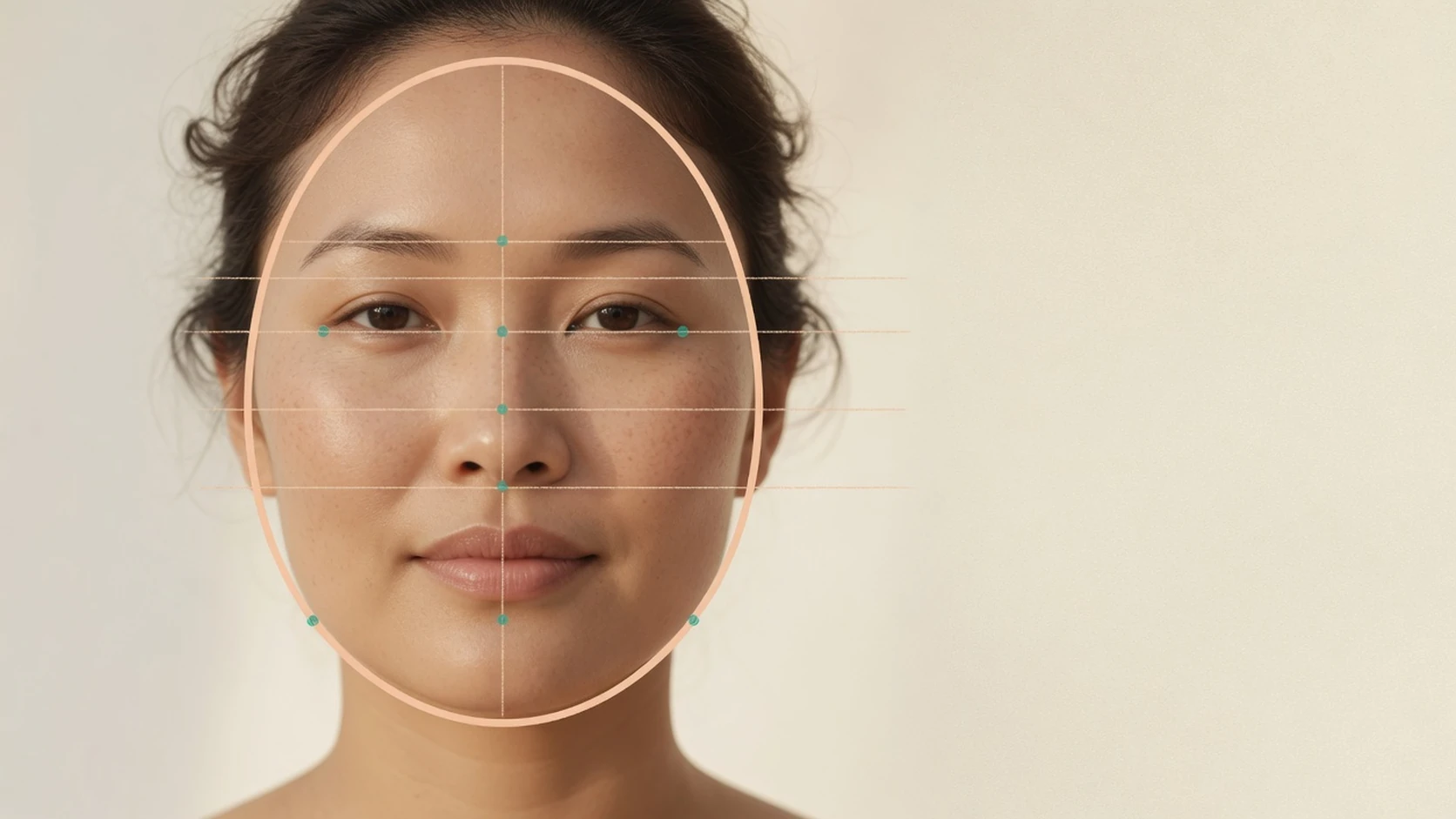
Facial harmony is one of the most useful—and most misunderstood—ideas in face analysis. This guide defines the concept, separates it from symmetry and beauty judgments, and explains how AI tools can measure proportions without pretending to rank human worth.
What Is Facial Harmony?
Facial harmony refers to how facial features relate to one another in proportion, balance, and visual coherence. The question is not whether one feature is “perfect” in isolation, but whether the relationships among facial thirds, eyes, nose, mouth, jaw, and chin support a coherent whole. Because those relationships can be described and measured, they are a better foundation for explainable analysis than vague claims about attractiveness.
Facial Harmony vs. Symmetry
Symmetry measures left–right similarity. Harmony is broader: it includes how regions of the face balance each other and how feature spacing supports the overall structure. A face can look coherent with mild natural asymmetry, and a highly symmetrical face can still look unbalanced if major proportions are off. Treating symmetry as the only score collapses important information.
What AI Can Measure From One Photo
From a clear front-facing photo, AI tools can detect facial landmarks, estimate proportion relationships, score selected categories, and assess photo quality factors such as lighting, angle, and occlusion. Confidence matters: a low-quality photo can produce a weaker estimate even when the face itself has not changed. Useful tools make those limits visible instead of hiding them behind a single number.
What AI Tools Cannot Do
AI face analysis cannot determine objective beauty, personality, health, or social value. It is not medical, psychological, dermatological, or surgical advice. It also cannot fully separate temporary photo conditions from stable facial structure. Different photos of the same person may produce different results for legitimate technical reasons.
How FacialHarmonyAI Uses the Concept
FacialHarmonyAI starts landmark detection and photo-quality checks in your browser, then produces a free preview with a harmony band, confidence, and concise feedback. If you unlock the full report, you receive detailed scores, ratio explanations, visual evidence, and low-risk guidance focused on styling, photography, and presentation—not surgery or ranking systems.
How to Use an Analysis Responsibly
Use one clear front-facing photo under consistent conditions when you want comparison value. Read confidence and photo-quality notes before over-interpreting a score. Prefer low-risk experiments such as hair, glasses, posture, and camera angle. Do not analyze minors, do not use photos without permission, and do not treat the result as a verdict on self-worth.