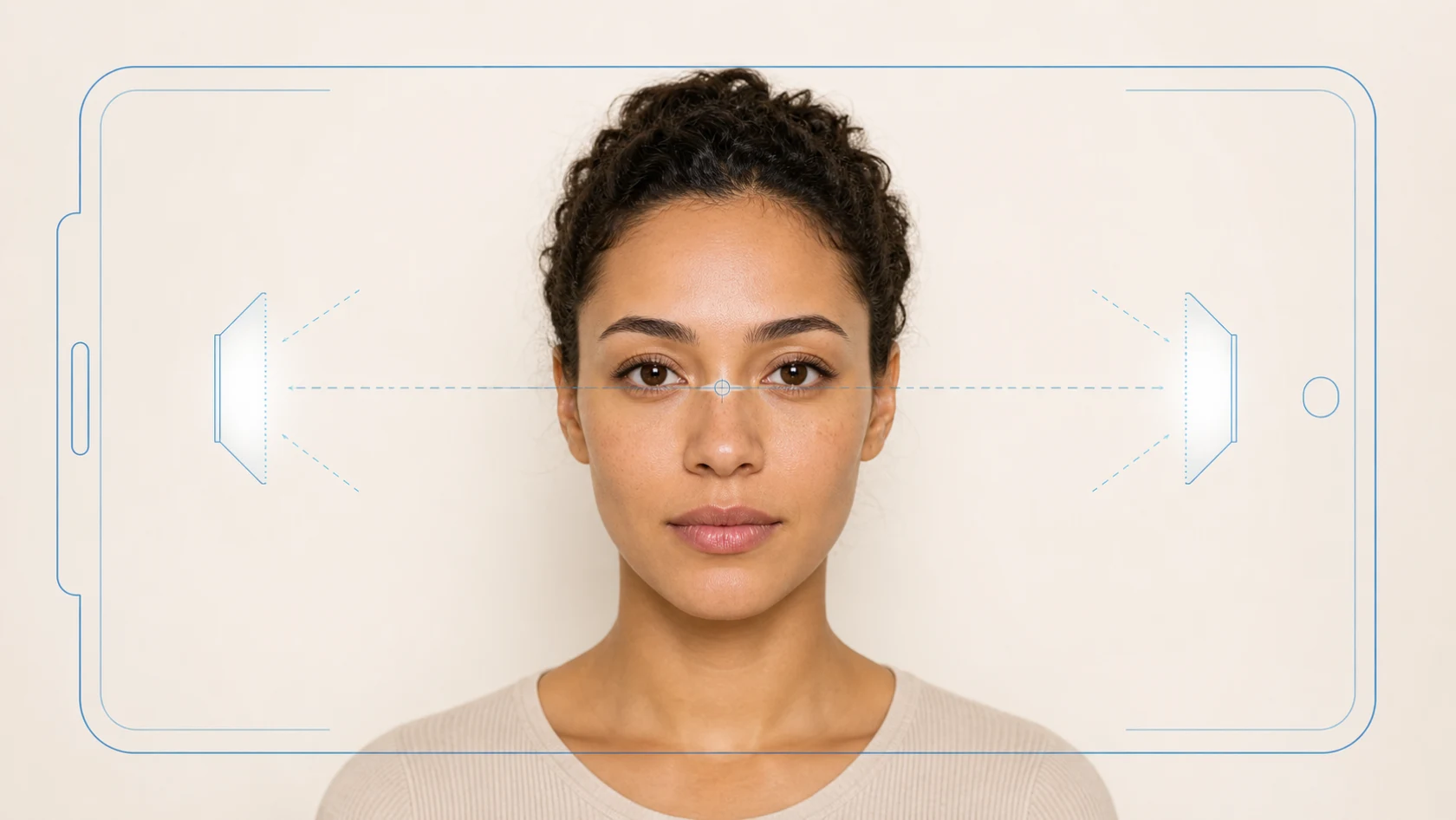
How the science of proportion and the psychology of self-perception converge to create lasting confidence—and what it means for your own journey.
The Two Sides of Facial Harmony
When we talk about facial harmony, we're really talking about two interconnected stories.
The first is a story of mathematics—of ratios, angles, and proportional relationships that surgeons and researchers have studied for centuries. It's the story of how the eyes, nose, lips, and jaw relate to each other in ways that feel naturally balanced.
The second is a story of psychology—of how seeing yourself as balanced and proportionate transforms not just your appearance, but your confidence, your social interactions, and your emotional well-being.
These two stories are inseparable. Understanding both is the key to understanding what facial harmony really means—and why it matters so deeply.
The Mathematical Foundation: Proportion as Precision
The Architecture of the Face
Facial plastic surgeons approach the face as an architectural problem. When assessing facial harmony, they divide the face into precise zones and measure the relationships between them:
The Vertical Thirds:
- Upper third: Hairline to the spot between the brows (glabella)
- Middle third: Glabella to the base of the nose
- Lower third: Base of the nose to the chin
With age, balance between these thirds shifts. Volume loss, skin laxity, and gravitational changes disrupt the proportional relationships that once felt natural. The goal of facial rejuvenation isn't to chase some universal ideal—it's to restore the balance that's unique to each individual.
The Eyes-Nose-Mouth Relationship:
Beyond vertical zones, surgeons examine how features relate horizontally:
- Eyes should ideally be one eye-width apart
- The nasal bridge should flow naturally between the brows, aligning with the center of the philtrum (the groove above the lips)
- The outer edges of the mouth should align with the pupils or the medial edge of the iris
These aren't arbitrary standards. They're observations drawn from decades of clinical experience and research into what the human brain perceives as naturally balanced.
The Critical Role of the Nose
The nose occupies the center of the face, making it a linchpin of facial harmony. Surgeons evaluate several key angles:
- Nasofrontal angle (forehead to nose): Ideally 115° to 130°
- Nasolabial angle (nose to upper lip): 95° to 105° for women, 90° to 95° for men
- Nasal width: Nostrils should align vertically with the inner corners of the eyes
- Tip projection: The nasal tip should project approximately 60% of the nose's total length
These measurements aren't about creating "perfect" noses. They're about creating noses that work with the chin, the midface, and the overall facial structure. A nose that looks beautiful in isolation might look completely wrong if it doesn't harmonize with surrounding features.
The Chin-Jawline Connection
The lower third of the face presents another set of proportional relationships. A balanced profile typically features a chin that aligns with or slightly trails a vertical line dropped from the lower lip. The jawline should have appropriate contour and definition, with the mandibular angle creating natural shadow lines.
What's fascinating is how these elements interact. A subtle chin augmentation—whether through implants or dermal fillers—can dramatically improve the perceived balance of the nose. A well-executed facelift can restore the relationship between the jawline and the neck. Nothing on the face exists in isolation.
The Volume Factor
While sagging skin often gets the most attention in facial aging, volume loss—particularly in the mid-face—is equally significant. Surgeons evaluate:
- Malar projection (cheekbone prominence)
- Tear trough depth
- Nasolabial fold severity
Modern approaches combine volume restoration with structural lifting, using tools like 3D imaging to visualize how subtle enhancements can complement surgical results. The goal is always the same: restore homeostasis between all facial features.
The Psychological Dimension: Beyond the Mirror
How the Brain Processes Facial Harmony
Here's where the story gets truly fascinating. The human brain isn't just visually perceiving facial harmony—it's emotionally responding to it.
Neuroscience research reveals that symmetrical, proportionate faces activate specific brain regions associated with reward and positive emotion, particularly the medial orbitofrontal cortex. When we see a balanced face, our brain automatically registers feelings of trustworthiness, warmth, and friendliness.
This isn't learned behavior. It's evolutionary biology. For millennia, facial symmetry has served as a signal of good health, genetic fitness, and developmental stability. Our ancestors who preferred symmetrical mates were more likely to produce healthy offspring—and that preference is hardwired into our neural architecture.
The Self-Perception Shift
But what happens when you see facial harmony in yourself?
Research consistently shows that individuals who perceive their features as balanced report:
- Higher self-esteem
- Greater social confidence
- Reduced appearance-related anxiety
- Improved mental well-being
- More positive social interactions
This isn't vanity. It's psychology. When your external appearance aligns with your internal sense of self, something powerful happens. The gap between "how I look" and "how I want to look" narrows, and that narrowing produces genuine psychological relief.
The Facial Feedback Effect
Perhaps most intriguing is the facial feedback hypothesis—the idea that our facial expressions influence our emotional states.
Studies have shown that reducing negative facial muscle activity (like frown lines) through treatments such as Botox can actually improve mood. When you can't furrow your brow in frustration as easily, you may experience less frustration. When your resting face looks more relaxed and approachable, you may feel more relaxed and approachable.
This creates a fascinating loop: improving facial harmony changes your expressions, which changes your emotional state, which changes how others respond to you, which further improves your emotional state. It's a virtuous cycle of psychological well-being.
The Integrated Approach: Body and Mind as One
Why Holistic Treatment Matters
The most effective approaches to facial harmony recognize that the face can't be treated in isolation. Every feature interacts with every other feature, and the psychological impact of any change depends on how it affects the whole.
This is why leading practitioners emphasize comprehensive assessment rather than isolated procedures. A rhinoplasty that ignores the chin may create new disharmony. A facelift that doesn't address volume loss may produce a pulled, unnatural appearance. The goal is always to enhance the relationships between features, not to perfect any single element.
The Personalized Path
Just as there's no universal prototype of a beautiful face, there's no universal path to facial harmony. Effective treatment requires understanding:
- Your unique facial architecture
- How aging has affected your specific proportions
- What balance looks like for your face, not for some idealized template
- How changes will affect your expressions and emotional presentation
This personalized approach is why consultation and analysis are so critical. Before any intervention—surgical or non-surgical—you need to understand your current proportions and visualize how potential changes will affect your overall harmony.
Non-Surgical Options: Subtle but Significant
Not everyone needs or wants surgery. Non-surgical approaches can achieve meaningful improvements in facial harmony:
Dermal Fillers: Add volume to cheeks, lips, jawlines, and under-eyes. When strategically placed, they can restore balance and proportion without surgery.
Botox: Relax overactive muscles that contribute to wrinkles or asymmetrical expressions. Can subtly contour the jawline and smooth lines.
Skin Treatments: Chemical peels, laser therapy, and microneedling improve skin texture and tone, providing a clearer canvas that enhances overall harmony.
Orthodontic Interventions: Modern orthodontics goes beyond straightening teeth—it addresses the entire facial structure, improving the relationship between jaw, teeth, and lips.
The key is that these treatments work best when they're part of a holistic plan that considers how each element contributes to overall balance.
The Measurable Benefits: What Research Shows
Quantified Psychological Improvement
The psychological benefits of facial harmony aren't just anecdotal—they're measurable. Studies using validated instruments like the FACE-Q Scale have documented:
- Significant reductions in negative psychological states
- Measurable increases in social confidence
- Average perceived age reductions of approximately 4.5 years
- Improved quality of life and social interactions
These aren't small effects. They represent meaningful changes in how people experience their daily lives—changes that ripple outward into relationships, careers, and personal fulfillment.
The Confidence Cascade
Confidence is self-reinforcing. When you feel good about your appearance, you're more likely to:
- Make eye contact in social situations
- Speak up in professional settings
- Pursue opportunities you might otherwise avoid
- Form deeper connections with others
This "confidence cascade" means that the benefits of facial harmony extend far beyond the mirror. They reshape how you move through the world and how the world responds to you.
Long-Term Emotional Resilience
Research on corrective jaw surgery patients reveals long-term psychological benefits that persist years after treatment:
- Sustained improvements in self-image
- Reduced social anxiety
- Enhanced communication and career opportunities
- Greater emotional stability and life satisfaction
These findings suggest that achieving facial harmony isn't just about looking better—it's about building a foundation for lasting psychological well-being.
Practical Insights: Understanding Your Own Harmony
What Gets Measured
Modern facial analysis evaluates the same dimensions that surgeons and researchers study:
| Dimension | What It Reveals |
|---|
| Facial Thirds | Balance between upper, middle, and lower face zones |
| Eye Region | Spacing, placement, and regional balance |
| Nose-Mouth Relationship | Central feature proportion context |
| Jaw & Chin | Lower-face contour and balance signals |
| Symmetry | Left-right landmark differences |
| Photo Quality | Lighting, angle, and clarity checks |
How to Use This Knowledge
Understanding your facial proportions empowers you to make informed decisions:
For Photography:
- Use even, front-facing lighting to accurately capture your natural proportions
- Find angles that showcase your best features
- Understand how photo quality affects perception
For Styling:
- Choose hairstyles that complement your facial thirds
- Select glasses that enhance rather than overwhelm your features
- Use makeup strategically to enhance balance
For Wellness:
- Maintain healthy skin through proper care
- Consider facial exercises that support muscle tone
- Focus on consistency in your routines
For Professional Decisions:
- Approach any cosmetic considerations with clarity about your goals
- Understand your unique structure before consulting professionals
- Use analysis to have informed conversations about options
The Future: Technology Meets Understanding
AI-Powered Insight
Modern AI facial analysis represents a convergence of mathematical precision and accessibility. These tools can:
- Detect facial landmarks with consistency
- Calculate proportional relationships objectively
- Provide context about what specific proportions mean
- Offer privacy-first analysis that keeps you in control
The technology is democratizing understanding—making insights that were once available only through professional consultation accessible to anyone with a smartphone.
The Human Element
Yet technology is only part of the story. The most meaningful transformation happens when technical understanding meets psychological self-awareness. Knowing your proportions is valuable. Understanding how those proportions affect your confidence and self-perception is transformative.
The Bottom Line
Facial harmony exists at the intersection of mathematics and psychology. It's about the precise relationships between features—and it's about how those relationships shape your confidence, your social interactions, and your emotional well-being.
The science is clear: balanced, proportionate faces are easier for the brain to process, are perceived as more attractive, and trigger positive emotional responses. When you see that balance in yourself, the psychological benefits are profound and measurable.
But the most important insight is this: facial harmony isn't about conforming to some universal ideal. It's about understanding your unique structure and making choices—whether through styling, photography, skincare, or professional guidance—that help you present your most confident, authentic self.
The mathematics provides the framework. The psychology provides the meaning. Together, they reveal why facial harmony matters—and why understanding it is the first step toward lasting confidence.
Ready to explore your own facial harmony? Understanding your unique proportions is the first step toward informed choices and lasting confidence. Discover your facial balance and see what your features reveal about your natural harmony.